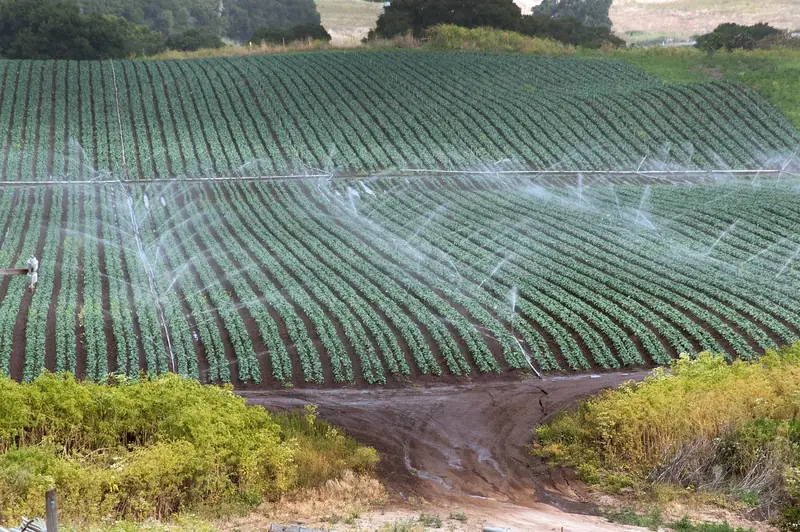
The project's main output is a decision-support platform for irrigation (how it worked). Its job was to make advanced irrigation technology and agronomic knowledge usable by ordinary growers, so that water is used better. Saving water benefits the farm, the community downstream and the environment; the project argued that it also helps long-term food security, and better scheduling tends to reduce energy, fertiliser and pesticide use too.
Field tests and demonstrations
The first versions of the platform were tested at nine sites in Europe and Israel. The partners then developed and integrated new components. In 2016 the finished platform was shown to farmers at open field days in Denmark, Greece, Israel, Italy, Portugal and Spain.
Over the three test seasons the consortium reported:
- significant water and energy savings, with stable or higher yields;
- at some sites, less fertiliser used.
An early simulation on cotton in northern Greece used about 55% of the usual allocation in a rainy year and 85% in a dry year (details).
Public deliverables
These reports were published by the consortium. We do not host them; where the Internet Archive kept a copy, we link to it.
Stage 1 – analysis and first platform
- D2.1 Assessment of theoretical boundaries of precise irrigation (Internet Archive copy)
- D2.2 Detailed system design (Internet Archive copy)
Stage 2 – development
- D4.1 Prototype of the C-Tech water quality sensors and MobiLas sensor (Internet Archive copy)
- D5.1 Irrigation strategy selection (Internet Archive copy)
- D6.4 FIGARO decision-support user manual (Internet Archive copy)
Stage 3 – testing and validation
- D8.2 On-farm field test calibration / D8.3 On-farm validation results (Internet Archive copy)
Assessment (horizontal)
- D7.2 Quantification of fresh water and energy savings (Internet Archive copy)
Official project summaries and reports: CORDIS.