Salty irrigation water: reading a water analysis and planning the leaching fraction
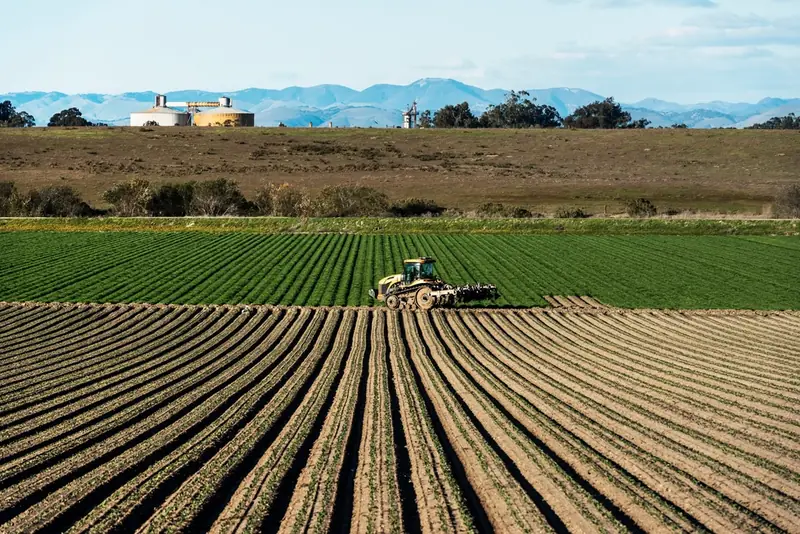
Photo: rawpixel (CC0, credits)
Every irrigation water carries dissolved salts. The crop takes up the water and leaves most of the salt behind, so a field irrigated for years with even moderately salty water slowly accumulates it in the root zone unless some water is allowed to drain through and carry it away. Planning that extra water, the leaching fraction, is one of the oldest calculations in irrigation, and one of the most often skipped.
The number that matters on a water analysis
A laboratory water analysis for irrigation lists many lines: calcium, magnesium, sodium, chloride, bicarbonate, boron, pH. For the salinity question, one line summarises most of the story: the electrical conductivity of the water, written ECw, in decisiemens per metre (dS/m). Pure water conducts electricity poorly; dissolved salts make it conduct better, so conductivity rises with the salt load. Some laboratories also report total dissolved solids (TDS) in milligrams per litre, but conductivity is quicker to measure, easier to compare and the unit used in the standard guidelines. Older reports may use millimhos per centimetre (mmho/cm), which is numerically the same as dS/m.
The reference for interpreting these numbers is still FAO Irrigation and Drainage Paper 29, Water quality for agriculture, by R. S. Ayers and D. W. Westcot (revised edition, 1985). Its guideline table classifies the salinity hazard of irrigation water into three degrees of restriction on use:
| Degree of restriction | ECw (dS/m) | TDS (mg/l) |
|---|---|---|
| None | below 0.7 | below 450 |
| Slight to moderate | 0.7 to 3.0 | 450 to 2,000 |
| Severe | above 3.0 | above 2,000 |
The table comes with assumptions that are easy to forget. It supposes that at least 15% of the applied water drains below the root zone, that rainfall plays no significant part in meeting crop demand or in leaching, and that there is no uncontrolled shallow water table within two metres of the surface. Where those conditions do not hold, the same water can be more or less of a problem than the table suggests. “Restriction” also does not mean “unusable”: it means that crop choice and management have to take the salt into account.
Soil salinity, not water salinity, is what the crop feels
Plants respond to the salt concentration of the water in the soil around their roots. That concentration is higher than in the irrigation water, because evaporation and transpiration remove water but leave the salts. To compare soils on a common basis, laboratories measure the conductivity of a saturated soil paste extract, written ECe. FAO-29 notes that, under the usual leaching fraction of 15–20%, the average root-zone salinity settles at about one and a half times that of the water (ECe ≈ 1.5 ECw). With little or no leaching, the ratio climbs.
Crop tolerance is expressed with the same measure. The model used in FAO-29, from work by E. V. Maas and G. J. Hoffman, says that yield is not affected up to a threshold soil salinity, then falls in a straight line:
relative yield (%) = 100 − b × (ECe − a)
where a is the threshold, in dS/m, and b the percentage of yield lost for each additional dS/m. The threshold values differ widely between crops. A few examples from FAO-29's tolerance table, giving the soil and water salinity at which full yield is still expected:
| Crop | ECe at 100% yield (dS/m) | ECw at 100% yield (dS/m) |
|---|---|---|
| Barley | 8.0 | 5.3 |
| Cotton | 7.7 | 5.1 |
| Wheat | 6.0 | 4.0 |
| Tomato | 2.5 | 1.7 |
| Alfalfa | 2.0 | 1.3 |
| Maize | 1.7 | 1.1 |
| Potato | 1.7 | 1.1 |
| Grape | 1.5 | 1.0 |
| Bean | 1.0 | 0.7 |
The spread is the practical message: a water that a barley or cotton grower can use without thinking twice may cost a bean or maize grower part of the crop. The values were established in specific trials and are guides, not guarantees; variety, climate, growth stage and soil all shift them. Sensitivity is often greatest at germination and early growth.
The leaching requirement
To keep the root zone at or below the crop's threshold, some water must pass beyond the roots and take salt with it. FAO-29 estimates the minimum share needed, the leaching requirement (LR), with an empirical equation from J. D. Rhoades and colleagues:
LR = ECw ÷ (5 × ECe − ECw)
where ECe is the average soil salinity the crop tolerates (the threshold in the table above, for full yield). The factor 5 was obtained empirically. The total water to apply then follows from the crop's water demand:
applied water = ET ÷ (1 − LR)
Take a tomato crop irrigated with water at 1.2 dS/m, inside the “slight to moderate” band. With the tomato threshold of 2.5 dS/m:
- LR = 1.2 ÷ (5 × 2.5 − 1.2) = 1.2 ÷ 11.3 ≈ 0.11, about 11% of the applied water;
- for a season's crop evapotranspiration of 500 mm, applied water = 500 ÷ 0.89 ≈ 560 mm.
The same water on beans, with a threshold of 1.0 dS/m, gives LR = 1.2 ÷ 3.8 ≈ 0.32: almost a third of the water would have to drain away, a sign that the crop and the water are poorly matched. These are our own calculations from the FAO-29 formulas, for illustration. The crop evapotranspiration itself comes from a method such as the one in our article on crop coefficients and FAO-56.
Leaching only works where the water goes
The formula assumes the extra water is spread evenly. In practice, an irrigation system that applies more at one end of a field than the other leaches one part too much and the other not enough. The poorly watered patches are exactly where salt builds up. Measuring and improving drip irrigation uniformity is therefore part of salinity management, not only of water saving: a low uniformity forces a grower either to over-irrigate the whole field to protect the dry spots, or to accept salt damage there.
Leaching also needs drainage. Where a shallow water table or a compacted layer stops the water moving down, extra irrigation raises the water table instead and can bring salts back up by capillarity. Leaching does not have to happen at every irrigation: in many climates, winter rain or a deliberate heavy irrigation outside the growing season does the job, provided the soil drains.
What drip irrigation changes
Drip irrigation keeps the soil near the emitters constantly moist, so salts are pushed outwards and accumulate at the edges of the wetted bulb and at the surface between drip lines, while the zone under the emitter stays relatively clean. Frequent irrigation with salty water is often better tolerated under drip than under sprinklers, which can also wet and scorch the leaves. Two cautions follow. First, a light rain after a dry season can wash the salt ring from the edges back into the root zone, which is why some growers keep the drip running through the first rains. Second, any strategy that deliberately applies less water than the crop demands, such as regulated deficit irrigation, also reduces leaching, so it has to be planned with the water quality in mind.
A short checklist
- Get a water analysis, including ECw, sodium, chloride and boron, and repeat it if the source changes over the season, as wells and rivers often do.
- Compare ECw with the crop's tolerance, not only with the general guideline table.
- Add the leaching requirement to the irrigation plan, using the formula above or local extension guidance.
- Check uniformity and drainage before increasing water: leaching that does not reach the dry spots, or cannot drain, does not help.
- Monitor the soil, with occasional soil samples at several depths. Some soil moisture sensors also report bulk electrical conductivity, which can show a trend, though it is not the same measurement as ECe.
Salinity is not the only water-quality issue: sodium can damage soil structure and slow infiltration, and specific ions such as chloride and boron are toxic to sensitive crops at low concentrations. FAO-29 covers each of them with its own guideline values, and a water analysis interpreted by a local adviser remains the best starting point.
Sources
- Ayers R. S., Westcot D. W. (1985), Water quality for agriculture, FAO Irrigation and Drainage Paper 29 Rev. 1, Rome: FAO (Table 1, guidelines for interpretation of water quality; Table 4, crop tolerance and yield potential; equations 7, 9 and 10).
- Maas E. V., Hoffman G. J. (1977), “Crop salt tolerance: current assessment”, Journal of the Irrigation and Drainage Division, ASCE, 103(IR2): 115–134.
- Rhoades J. D. (1974), “Drainage for salinity control”, in J. van Schilfgaarde (ed.), Drainage for Agriculture, Agronomy Monograph 17, American Society of Agronomy.